
Before Tooling
Why drawing review comes before tooling
Hydroforming can reduce welding and create cleaner hollow structures, but it is not suitable for every metal part. A useful first review should clarify whether the geometry can seal, whether the material can expand, and whether the production target justifies tooling.
Public cases can show what has been made before, but they do not prove that a new part will follow the same route. Your own drawing, material, volume, and validation requirements still need to be reviewed before tooling begins.
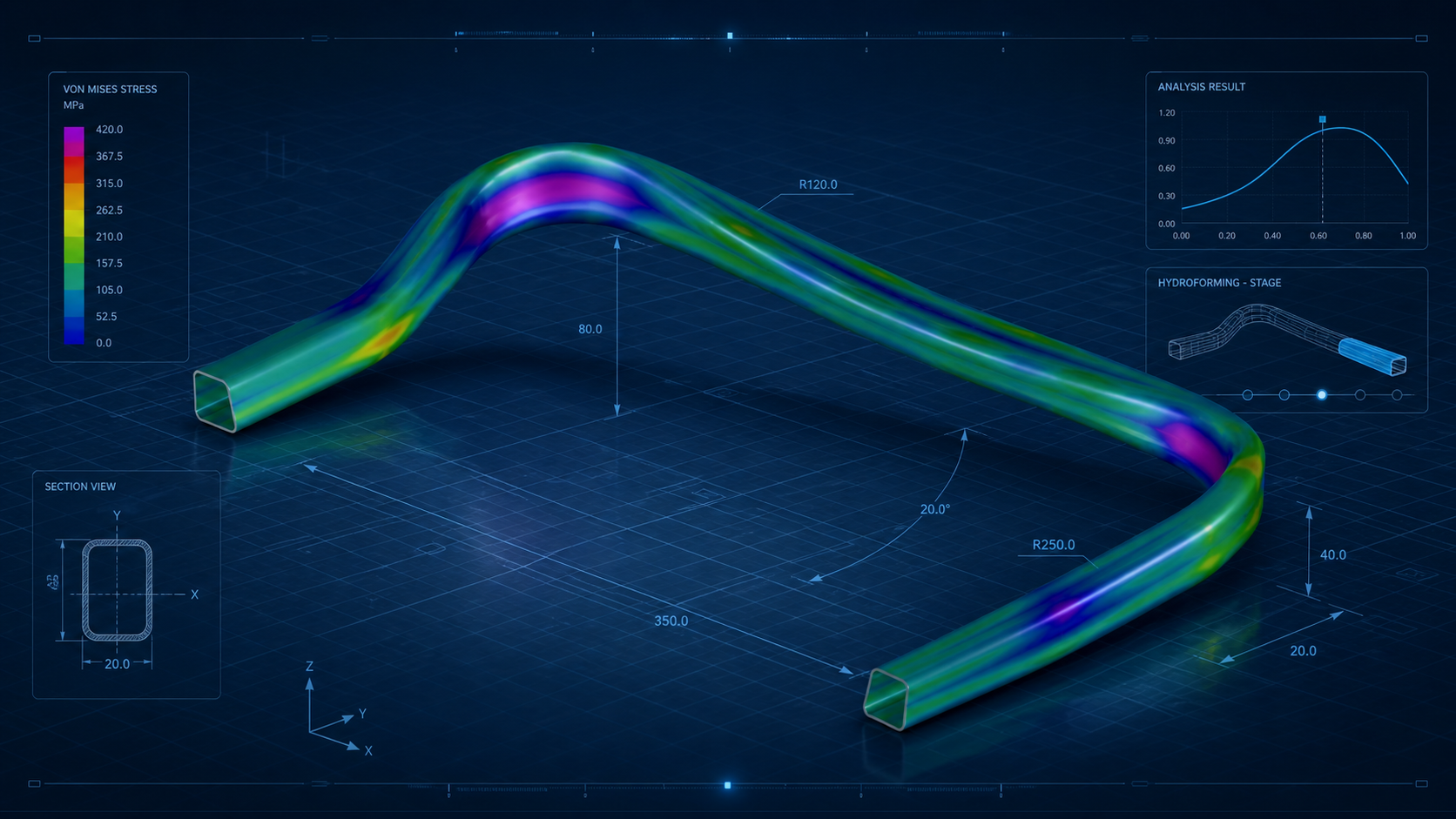
Drawing review should make tooling risk visible before mold development starts.
Checklist
Seven points to review before mold discussion
Part geometry
Review bend radius, branch shape, closed section, expansion area, and whether the part has enough space for feeding and sealing.
Material and wall thickness
Confirm material grade, blank tube condition, target wall thickness, thinning risk, and whether the material has realistic formability.
Sealing risk
Check the tube ends, branch openings, sealing length, and any geometry that may prevent the forming tool from holding pressure during the cycle.
Tolerance target
Separate critical dimensions from reference dimensions so the sample inspection plan can focus on the right features.
Current process issue
Explain what the current process cannot achieve, such as weld reduction, weight control, surface continuity, or more consistent assembly.
Annual volume
Use volume and target timeline to judge whether mold development and trial forming are economically realistic.
Trial-part acceptance
Define how trial samples will be checked: dimensions, appearance, wall thickness, assembly fit, and any downstream leak test or customer-specific inspection that the customer specifies and arranges separately.
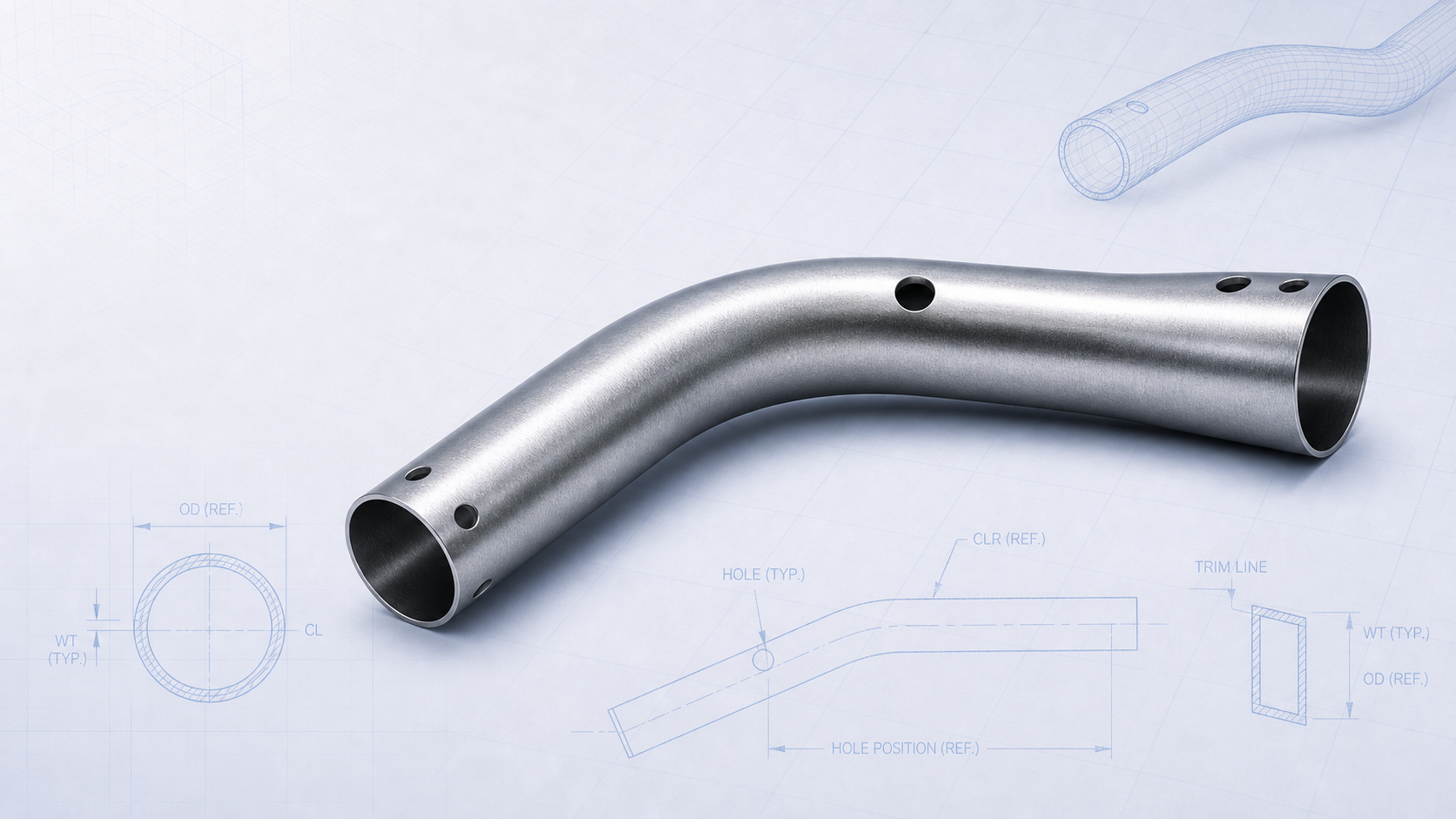
Sample Acceptance
Agree on how trial parts will be accepted
Before the tool is released for manufacture, agree on the dimensions, interfaces, appearance, wall-thickness checks, sample quantity, and correction process that will be used to review the first trial parts.
RFQ Preparation
Information to send with a first inquiry
FAQ
Drawing review questions
Is a 3D model required for the first review?
A 3D model is helpful, but a first discussion can start with PDF drawings, photos, material information, and the current manufacturing problem.
Can sealing and wall thinning risk be reviewed before tooling?
Yes. Early review can identify obvious sealing difficulty, expansion risk, bend radius issues, and areas that need trial forming attention.
When is hydroforming not worth tooling?
If the part is simple, volume is too low, material formability is poor, or welding and bending already solve the problem reliably, tooling may not be justified.
What should be agreed before trial-part acceptance?
Agree on inspection points, critical tolerances, surface requirements, sample quantity, correction route, and approval standard before judging trial results.
Next Step
Send a drawing for hydroforming review
Include the drawing, material, wall thickness, expected quantity, sample photos, and the problem with the current process. We will first identify whether the part is suitable for review, then clarify the tooling and trial-part scope.
- Drawing files and sample photos
- Material, wall thickness, and annual volume
- Current process issue or improvement target