

Share the geometry, material grade, wall thickness, key dimensions, and expected demand.
Custom Hydroforming Manufacturer
Custom Hydroforming from Drawing to Production
Send us the part drawing, material, wall thickness, and target volume. We assess whether hydroforming is the right process before discussing tooling, trial parts, and repeat production.
Review before tooling
Geometry, material, and sealing
In-house tooling
Die design, build, and tryout
Trial parts first
Confirm the route before repeat orders
Production by drawing
Custom batches, not stock parts
Project Path
From drawing review to repeat production
Each project starts with the part requirements. Tooling begins only after the likely forming route, risks, and missing inputs are understood.
Start With a Drawing-
01
Review the Part
Check geometry, material, wall thickness, tolerances, and expected volume.
-
02
Define the Process
Plan the blank, end sealing, pressure path, and main forming risks.
-
03
Develop the Tooling
Complete die structure, sealing design, manufacturing, and assembly.
-
04
Try Out and Correct
Form trial parts, inspect them, and correct the tooling or process as needed.
-
05
Approve the Sample
Confirm the physical sample and prepare the agreed production conditions.
-
06
Run Repeat Production
Schedule follow-on batches against the approved part and process requirements.
Feasibility Review
Is hydroforming the right process for your part?
Assess the blank concept, end sealing, pressure path, thinning, wrinkling, and rupture risks.
Understand whether to proceed, what must change, and what information is still required.
Not every hollow metal part is a good hydroforming candidate. We assess the part geometry, material grade, critical tolerances, expected volume, end-sealing conditions, and likely forming risks before recommending whether the project should proceed to tooling.
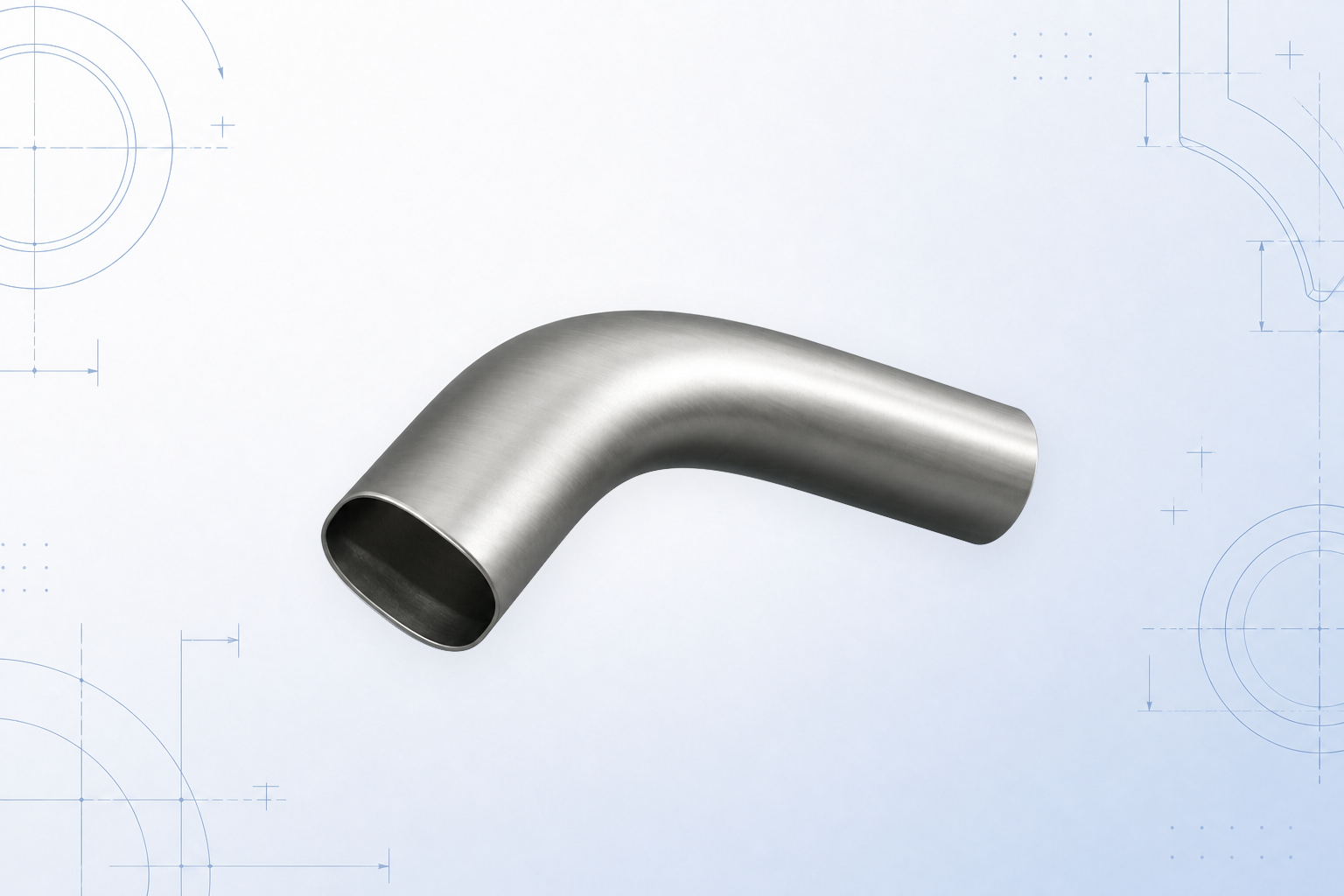
Check section changes, available material flow, and whether the tube ends can be sealed.
Match the material grade, condition, wall thickness, and starting blank to the geometry.
Identify critical dimensions and the likely thinning, wrinkling, or rupture controls.
Judge whether tooling investment and repeat production make sense for the expected volume.
Before Tooling
Confirm part feasibility and delivery scope
Is this part suitable for hydroforming?
We review the tube blank, material condition, end sealing, and critical tolerances, identify the main forming risks, and determine whether finite element analysis is needed before tooling.
Which project stages can ShuiYiYuan handle?
We can support feasibility review, tooling development, trial forming, sample approval, and build-to-print repeat production. Lead time, volume, and downstream work are confirmed for each project.
Project Support
Choose the support your project needs

01
Hydroforming Mold Development
Part review, die and sealing design, tool build, tryout, correction, and preparation for the approved production route.

02
Build-to-print Part Production
Hydroformed parts made to customer drawings or samples. Material, geometry, batch size, and any downstream work are confirmed for each project.

03
Equipment & Auxiliary Tooling
Project-specific hydroforming equipment and auxiliary tooling can be evaluated against the product structure and production requirements.

04
Feasibility Review
Before tooling, assess material behavior, sealing conditions, thinning, pressure path, critical tolerances, and the main forming risks.

05
Trial Parts & Sample Approval
Form trial parts, inspect the agreed characteristics, and correct the tool or process before repeat production.

06
Project-specific Downstream Support
Trimming, laser cutting, welding, fixture work, or assembly coordination can be included when the required scope is confirmed for the project.
1500T
Highest hydroforming press tonnage
20-1000mm
Evaluable product outside-diameter range
2-6mm
Incoming tube or blank wall thickness, endpoints included
13 sets
Active, schedulable hydroforming presses
45 working days
Typical sample lead time after contract and prepayment; project conditions apply
Since 2012
Factory established in Foshan, Guangdong
Project Delivery Scope
From feasibility review to build-to-print production
Feasibility Review
Review the drawing, material, wall thickness, critical tolerances, and expected volume before defining the forming route.
Tooling Development
Our in-house team handles die structure, sealing design, tool build, tryout, and required correction.
Trial Parts
Trial forming and agreed project checks are used to confirm the sample and refine the tooling and process route.
Build-to-print Production
After the sample and production conditions are approved, 13 active, schedulable hydroforming presses support repeat batches.
Public records: the company holds 11 valid utility model patents and was recognized as a National High-Tech Enterprise in China in 2024 (GR202444005543). These records are not ISO/IATF, product certification, or testing accreditation. View public records
Equipment and Evaluation Ranges
Hydroforming capacity and initial project ranges
The table lists equipment tonnage, evaluable dimensions, incoming wall thickness, common materials, and typical project lead times for an initial screening. Production suitability still requires review of the drawing, material condition, tolerances, tooling, and expected volume.
Send Drawing for Review
Maximum equipment tonnage
1500T hydroforming equipment
Product outside diameter
20-1000mm evaluation range
Incoming tube / tube blank wall thickness
2-6mm, endpoints included
Maximum production envelope
1200mm diameter x 300mm height
Common materials
Common project materials include carbon steel, stainless steel, aluminum alloy, high-strength steel, and copper; grade, condition, wall thickness, and geometry still require review
Factory location
Foshan, Guangdong, China
Established
2012
Sample cycle
About 45 working days after contract signing and receipt of prepayment, subject to project conditions
Mold cycle
About 35-40 working days after contract signing and receipt of prepayment, subject to project conditions
Engineering support
Finite element analysis and mold design team available
Hydroforming presses
13 active, schedulable units: 1500T x1, 1400T x1, 750T x2, 500T x1, 400T x1, 350T x1, and 200T x6
Auxiliary equipment
1 CNC / machining center, 2 welding machines, 6 laser cutting machines, 2 tube bending machines, and 2 inspection devices
Documentation
11 valid utility model patents; 2024 National High-Tech Enterprise recognition (GR202444005543)
NDA support
The legal entity can negotiate an NDA before sensitive files are transferred
Applications
Parts and industries we can evaluate

Automotive Components
Project experience covers exhaust, chassis and body structures, seat frames, and instrument-panel crossmembers.
View automotive hydroforming
Two-wheelers & Transportation
Frames, connectors, hollow transport structures, and special-shaped machinery tubes can be reviewed from the part drawing and material requirements.

Aircraft Components
Aircraft hollow structures and lightweight alloy parts are reviewed against the drawing, material, inspection, and program requirements.

Fluid & Industrial Piping Parts
Tees, elbows, reducers, hydraulic or pneumatic tubing, and other special-shaped fittings can be evaluated for forming. Finished-product pressure performance is not implied by forming alone.

Robotics & Automation Housings
Hollow frames, joint housings, support beams, protective shells, and control-system brackets can be reviewed against the required geometry and material.
Public Cases
Public hydroforming case examples
These images are selected public examples, not a stock-parts catalogue. Customer and project details remain undisclosed where they are confidential.
View Public Case Library
Public example
304 stainless steel transformer housing
This is a 304 stainless steel transformer housing. The public information is limited to the part type, material, and hydroforming review scope; no customer, production volume, installation position, or quantified performance result is disclosed.
- Material
- 304 stainless steel
- Part type
- Transformer housing
- Review scope
- Hydroforming feasibility

Automotive structures
Formed hollow parts for vehicle structures

Frames and brackets
Special-shaped frames and brackets

Pipeline parts
Special-shaped industrial piping parts
FAQ
Questions buyers usually ask first
Do you sell standard products?
No. Our work is mainly custom hydroforming tooling and build-to-print part production. A project normally starts with a drawing, sample, or technical requirement.
Does every product have a patent?
No. The legal entity holds 11 valid utility model patents, but this does not mean every customer part is patented. Customer drawings, product rights, and project information remain subject to the applicable ownership and confidentiality arrangements.
How should I start a project?
Start with the drawing, material grade, wall thickness, key tolerances, expected annual volume, and any current manufacturing issue. We first assess process suitability, then discuss tooling, samples, and production.
Can you sign an NDA?
Yes. Foshan Shunde ShuiYiYuan Hardware Mould Co., Ltd. can negotiate and sign an NDA before sensitive drawings, samples, or other project files are transferred.
What information should I prepare before requesting a quote?
Please provide 2D/3D drawings, material, wall thickness, annual volume, tolerance or inspection requirements, current process issues, sample photos if available, and whether an NDA is needed. More complete information helps us judge forming feasibility, mold scope, and sample timing.
Start a Project Review
Send the drawing and project requirements
Include the material grade, wall thickness, key dimensions and tolerances, expected volume, current process issue, and drawing or sample photos. We will review feasibility before discussing tooling and production scope.
Foshan Shunde ShuiYiYuan Hardware Mould Co., Ltd. / 佛山市顺德区水艺源五金模具有限公司No. 22 Hedi Avenue, Beijiao Community Industrial Zone, Beijiao Town, Shunde District, Foshan, Guangdong, China
18666383040@163.com
+86 137-2663-1717
+86 186-6638-3040
WhatsApp: +86 13246506041
WeChat: SYY18666383040